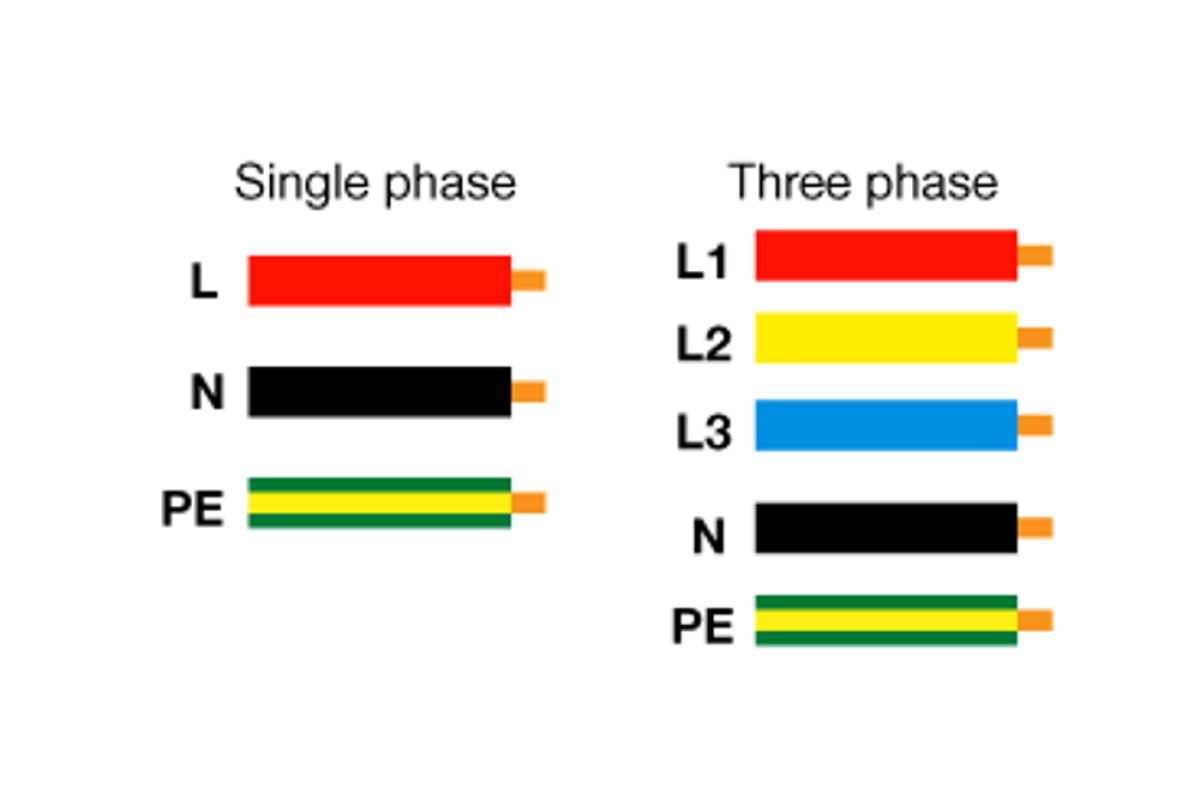
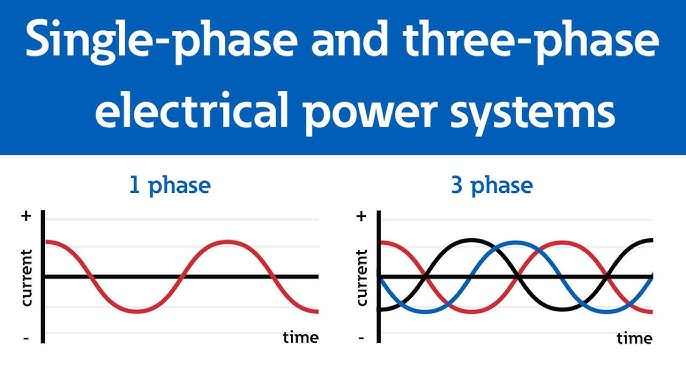
Single-phase power uses one alternating current (AC) wave for simpler, lower power needs (homes, small appliances), while three-phase power uses three AC waves, 120 degrees apart, for smoother, constant, and higher power delivery, essential for large motors, factories, and heavy machinery. Three-phase is more efficient for transmitting large power, using fewer wires for the same capacity, making it ideal for industrial use, whereas single-phase is sufficient and simpler for residential needs.
Single-Phase Power
- Wires: Typically one phase wire + one neutral wire + ground.
- Waveform: A single, pulsating AC wave.
- Voltage: Common residential voltages (e.g., 120V/230V).
- Best For: Homes, lighting, small appliances, lower power demands.
Three-Phase Power
- Wires: Three phase wires + optional neutral + ground (e.g., 3 or 4 wires).
- Waveform: Three AC waves, each 120 degrees out of sync, providing continuous power.
- Voltage: Higher voltages (e.g., 208V, 400V, 480V).
- Best For: Factories, large motors, data centers, heavy equipment, efficient power transmission.
Key Differences
- Efficiency: Three-phase is more efficient for large loads and transmission.
- Power Delivery: Single-phase power drops to zero between cycles; three-phase maintains near-constant power.
- Cost/Wiring: Three-phase uses less conductor material for the same power compared to single-phase, which may need larger wires.
- Application: Single-phase for homes, three-phase for industry.